
Our theory
Our theory measures the gap between what people buy and what they talk about, then uses formulation chemistry and bioinformatics to further analyze.
Lipophilic ligand efficiency
pIC50 – cLogP
How much activity the molecule delivers for its oiliness.
Small moleculeIn vitro profile
Cell and enzyme activity
What the ingredient does in controlled lab tests.
Lab evidenceActivity profile significance
- LLE > 5High
- cLogP < 3High
- Activation window & unionised state 34–66Medium
- Receptor efficacy 34–66Medium
- Live TEWL 0–11Low
In vitro assays · sample
- IC50
- 12.4 µM
- Metabolic stability (half-life)
- 48 min
- Tyrosinase inhibition
- 62%
- Cell viability CC50
- >200 µM
- Antioxidant capacity (DPPH)
- 41%
Mechanism of Action · targets ranked by benefit
- 01
NHE1
SLC9A1
Proposed route to brightening
- 02
Keratinization
GO:0031424 · KRT1, KRT10, FLG
Normalises how surface cells mature
- 03
VEGFA
Vascular signalling
Linked to visible redness
- 04
MMPs
MMP1, MMP2, MMP9
Enzymes that break down collagen
- 05
Tyrosinase
TYR
Pigment and tone
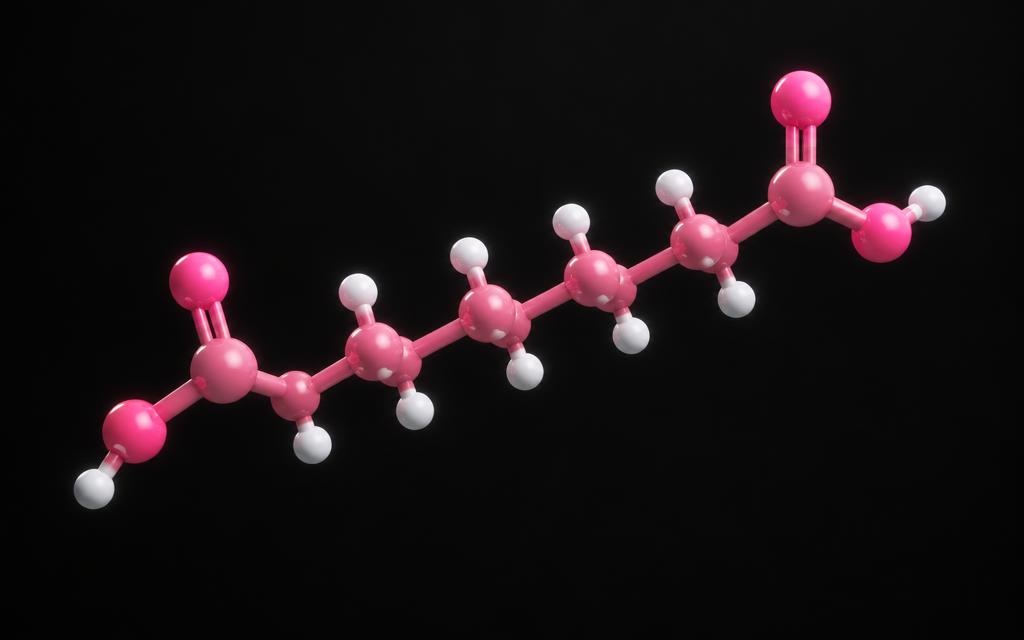 Sample
Ingredient Relationships
Sample relationship for Azelaic Acid, with the pathways it follows.
- 01NHE1Brightening
- 02KeratinizationClearer pores
- 03VEGFALess redness
- 04MMPsFirmer skin
- 05TyrosinaseBrightening
Key Synergies
Illustrative EGCG pairings · complementary roles, not clinically verified synergy.
- Epigallocatechin gallate + NiacinamideEGCG offers antioxidant support; niacinamide complements barrier and uneven-tone care.
- Epigallocatechin gallate + Hyaluronic AcidPairs EGCG's antioxidant role with a humectant that helps retain water at the skin surface.
- Epigallocatechin gallate + CeramidesCombines antioxidant support with barrier lipids; any TEWL benefit requires finished-product testing.
- Epigallocatechin gallate + Vitamin CPotential antioxidant pairing; EGCG stability, pH and the vitamin C form need formulation testing.
Bioinformatics summary
How it reaches the skin
A small dicarboxylic acid that crosses the stratum corneum at formula pH 4–6. It acts on keratinization and pigment pathways in the living epidermis, which is why it shows up for both clarity and tone.
ClarifyingLiterature Review · sample counts
Clinical
24
Human trials on tone and blemishes
In vivo
18
Skin measurements after topical use
In vitro
41
Enzyme and cell assays
In silico
9
Docking and pathway models